
Designing a professional company profile is about much more than arranging text and images on a page. It requires a combination of strategic thinking, visual storytelling, branding expertise, and the right design tools to create a document that reflects your business professionally.
At Company Profile Designers, every company profile is tailored to the client’s industry, audience, and business objectives. Rather than relying on generic templates, we create custom-designed corporate profiles that communicate credibility and leave a lasting impression.
While Adobe Photoshop and Adobe Illustrator are the primary tools we use, the software we choose ultimately depends on the specific requirements of each project. Every business is different, and our design approach is always guided by the final outcome rather than a fixed workflow.
Choosing the Right Tool for the Right Project
There is no single application that can meet every design requirement. A company profile designed for a manufacturing business may require detailed product visuals and technical diagrams, while a profile for a consulting firm may focus more on branding, infographics, and professional layouts.
Before we begin designing, we take time to understand the project’s objectives, target audience, content structure, and intended format. Whether the final deliverable is a digital PDF, a printed brochure, or a presentation-ready document, we choose the tools that best support those requirements.
This flexible approach allows us to create company profiles that are visually engaging, brand-consistent, and purpose-driven.
Adobe Photoshop
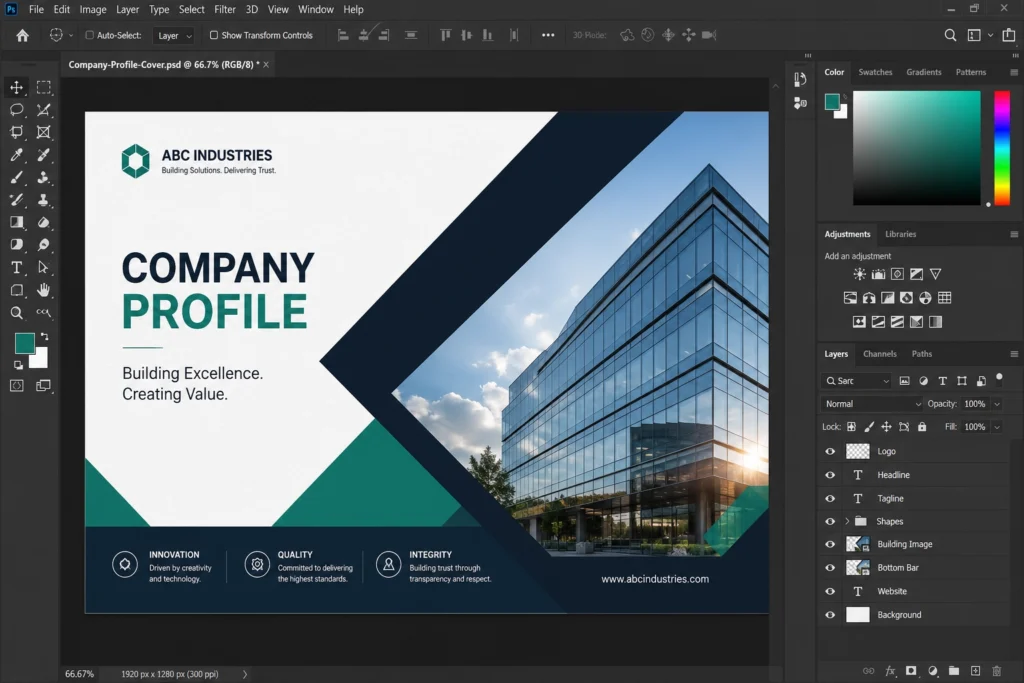
Adobe Photoshop is one of our primary tools for creating and enhancing the visual elements of a company profile.
A strong first impression often begins with high-quality imagery. Businesses frequently provide photographs of their offices, facilities, products, or team members, and Photoshop enables us to refine these visuals while maintaining a natural and professional appearance.
We commonly use Photoshop for:
- Image enhancement and colour correction
- Background removal and image cleanup
- Creating custom cover visuals
- Photo compositing
- Preparing images for print and digital formats
- Optimising image quality without compromising performance
Every image included in a company profile should support the brand’s message. Photoshop helps us ensure that each visual is clear, consistent, and aligned with the overall design.
Adobe Illustrator
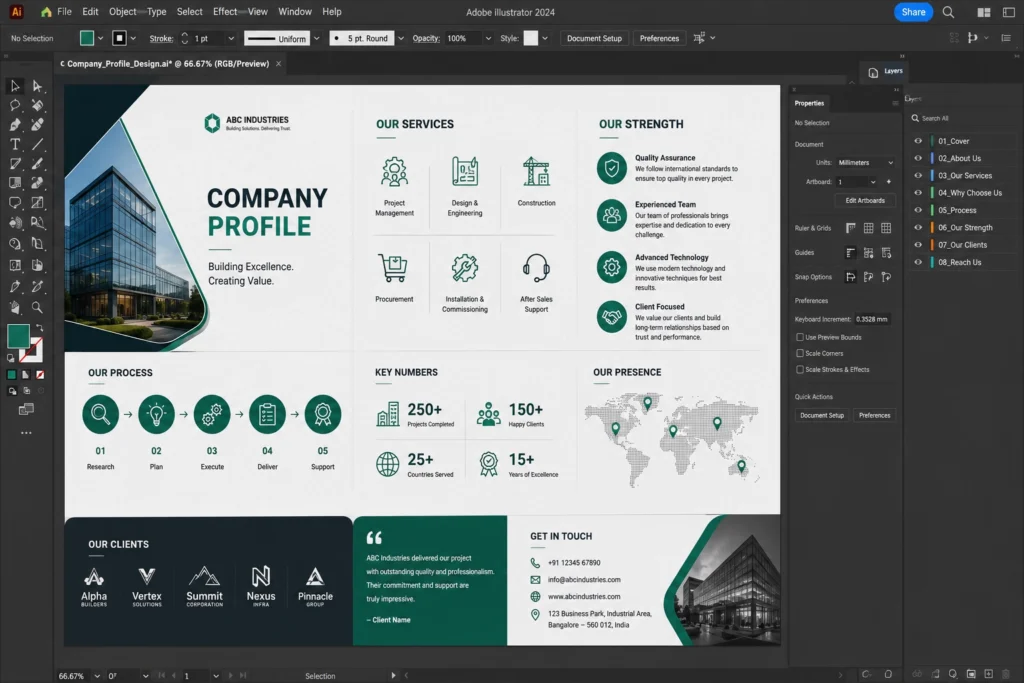
While Photoshop helps us work with images, Adobe Illustrator allows us to create scalable graphics that add clarity and professionalism to every company profile.
Rather than using generic icons or stock graphics, we create custom visual elements that match each client’s brand identity and make complex information easier to understand.
Illustrator is commonly used for:
- Custom icons
- Infographics
- Company timelines
- Process diagrams
- Organisational charts
- Service illustrations
- Maps and location graphics
- Brand patterns and graphic elements
Because Illustrator creates vector graphics, every element remains sharp and high quality regardless of size. This makes it ideal for both digital company profiles and professionally printed brochures.
Visual communication often explains ideas more effectively than lengthy paragraphs, helping readers absorb information quickly while making the profile more engaging.
Great Company Profiles Depend on More Than Software
Professional software is important, but great company profiles are created through thoughtful planning, clear communication, and effective design.
The same tools are available to thousands of designers. What makes the difference is how they are used.
Every company profile we create is designed with careful attention to information hierarchy, typography, colour consistency, visual balance, and brand identity. Our goal is not simply to make the document look attractive but to help businesses present themselves with confidence to clients, investors, partners, and other stakeholders.
The right combination of strategy, content, and design transforms a company profile into a valuable business development tool.
Final Thoughts
The tools we use are chosen to suit the needs of each project, ensuring that every company profile delivers the right message in the most effective way. While Adobe Photoshop and Adobe Illustrator form the foundation of our design process, our focus is always on creating a document that reflects your business professionally and supports your long-term goals.
At Company Profile Designers, we combine creative expertise with industry-leading design tools to develop company profiles that are visually compelling, professionally structured, and aligned with your brand. Whether you need a profile for client presentations, investor meetings, business partnerships, or marketing, we can help you create a company profile that makes a lasting impression.
