
Running a sericulture business is not just about farming silkworms, caring for mulberry plants, or selling cocoons. Today, buyers, investors, and partners expect a business to look professional, and ready for growth. One simple way to show this is through a strong and well-made company profile.
For silk farmers, small sericulture units, cocoon farmers, reelers, and silk traders, a clear profile can help you win better deals, build trust, and show the value of your work. This is where good sericulture company profile designs become important. In this blog, you will learn why a good profile matters, what to include, and how to make it stand out.
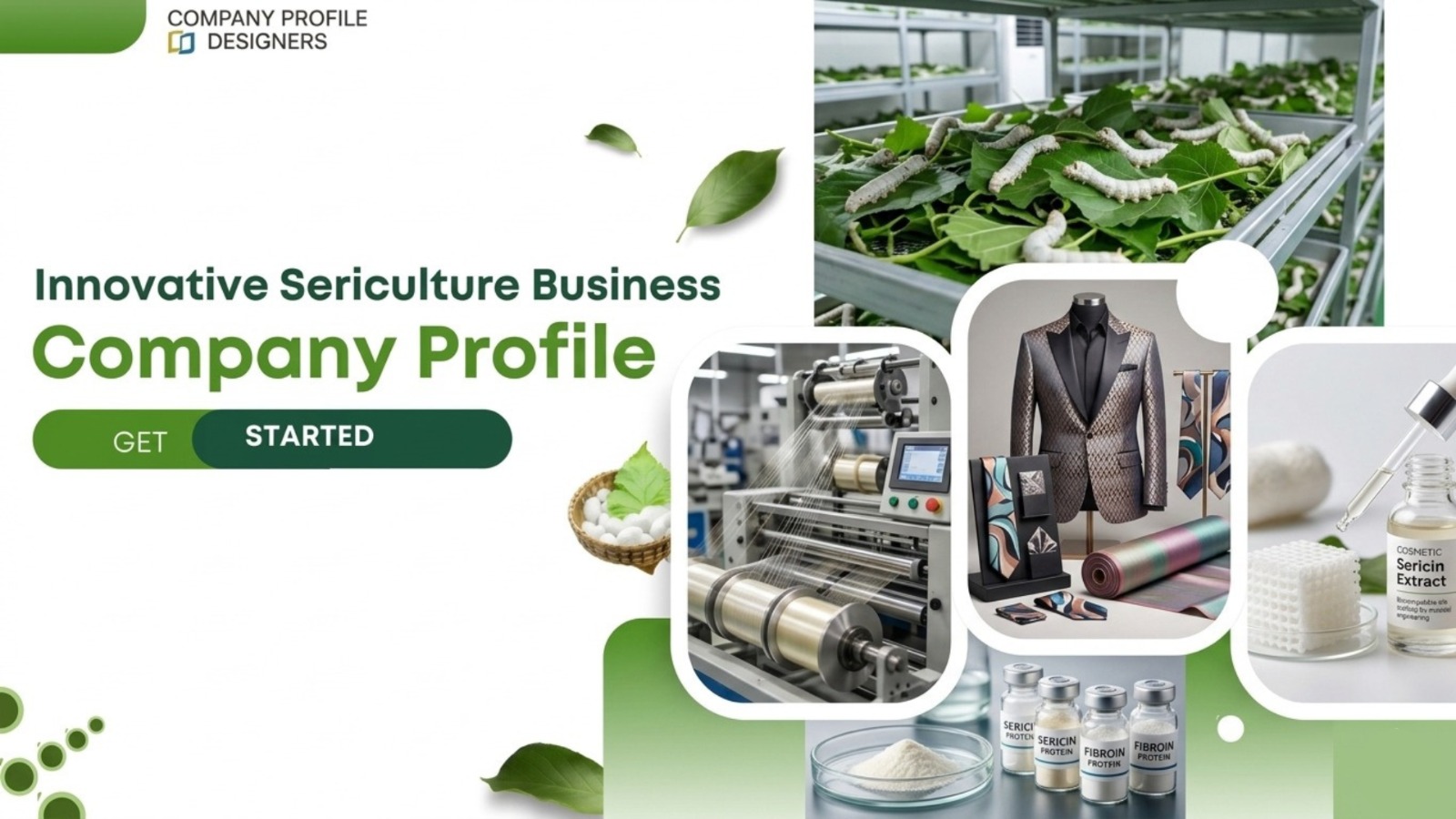
What Is a Sericulture Company Profile Designs?
A sericulture company profile designs is a short and clear document that shows the full identity of your silk farming business. It tells people who you are, what you do, how you work, and why buyers can trust you. It is not a long report, it is a simple and clean introduction that creates a strong first impression.
In sericulture, the profile explains the key parts of your work, such as:
- Mulberry farming
- Silkworm rearing
- Cocoon production
- Silk reeling and processing
- Quality control and clean farming methods
A company profile for sericulture business also shows your skills in every step of silk production, from growing mulberry leaves to making raw silk. It helps buyers and partners understand your experience, your production capacity, and your commitment to high-quality silk.
What to Include in a Sericulture Company Profile
A good profile does not need difficult words or complicated charts. Instead, it should explain your work in clear, easy language. Below are the key sections that make sericulture company profile designs effective and simple for readers.
Write a short and friendly introduction. Share how long you’ve been in the silk industry, your experience in silk farming or cocoon farming, and the role you play in the supply chain.
This is important for buyers who are not familiar with raw silk production. Explain:
- How silkworms are reared
- How mulberry leaves are grown
- How cocoons are collected
This gives your profile a strong base.
Farm size, number of rearing houses, your team, rearing methods, and hygiene practices all help buyers understand your capability.
List your products with simple notes such as:
- Fresh cocoons
- Dry cocoon
- Mulberry leaves
- Silk yarn or thread
Simple lists help readers understand your offerings quickly.
Even a simple point-by-point format works:
- Feeding silkworms
- Monitoring temperature
- Cocoon spinning
- Harvesting
- Drying
This shows discipline and consistency in your work.
Make this clear and easy to find. Add phone number, location, WhatsApp, and email.
Sericulture Company Profile: Quick Checklist
Use this checklist before you finish your profile. It helps you include all the key details buyers look for.
1. Executive Summary: Write a short “why” statement. Share your farm’s story and your focus in silk. This helps build trust quickly.
2. Production Capacity: Clearly state your output (like kg per month or farm size). This shows you can handle large and regular orders.
3. Quality Control: Explain how you grade and test cocoons. This proves your silk quality is consistent.
4. Traceability & Ethics: Mention your sourcing, clean rearing process, and any eco-friendly practices. Buyers today care about ethical production.
5. Direct Contact Information: Make your WhatsApp, email, and location easy to find. This helps buyers contact you fast.
The 'Traceability' Advantage: Why Modern Buyers Need It
The global silk market is changing. Today, buyers don’t want just silk. They want to know where it comes from and how it is made. Exporters, fashion brands, and textile mills now look for traceability and ethical production before they buy.
If your company profile only lists products, you are missing a big opportunity. A strong sericulture profile should clearly show how you work and how you ensure quality. Here’s what to include:
1. Your Production Cycle
Explain how you rear silkworms and harvest silk. Keep it short. This shows you control the process and maintain quality.
2. Hygiene Standards
Describe how you keep the environment clean and safe for silkworms. Good hygiene is a key sign of high-quality silk.
3. Certifications
List any certifications you have, like organic farming, GOTS, or ISO. These build trust and show your commitment to quality and ethics.
How Good Company Profile Designs Make a Difference
Professional design plays a major role. A simple, clean design makes your content easier to read and more attractive. Good sericulture company profile designs should:
- Use simple layouts
- Use clean fonts
- Highlight key information
- Add images that show real work
- Keep your branding consistent
This is why many silk businesses work with expert company profile designers to get a polished and attractive document. If you need help, experienced profile creators can prepare a complete company profile for sericulture business
Common Mistakes to Avoid while Creating a Company Profile
Many silk farmers lose buyers because of poor or unclear profiles. Avoid these mistakes when creating your sericulture company profile designs
- Avoid ‘walls of text.
- No photos of silk farming or cocoon farming
- Difficult words that buyers may not understand
- Missing contact details
- No story or background
- Unclear product list
Best Tips to Make Your Sericulture Profile Stand Out
To make your company profile for sericulture business, for quality standards and unique strengths to attract buyers and partners. Use these simple tips:
✔ Use simple language: Using simple language helps buyers from different regions understand your message clearly. Easy words make your profile friendly, readable, and suitable for all audiences, including farmers, traders, and exporters.
✔ Tell your real story: Sharing your real journey builds trust. Buyers connect better when they know your background, experience, challenges, and growth. Stories help your sericulture business feel genuine and committed to quality.
✔ Add real photos: Real photos of silkworms, mulberry leaves, farms, and cocoon harvesting give buyers confidence. Visual proof shows your quality, process, and authenticity, making your profile more engaging, believable, and professional.
✔ Show your strengths clearly: Highlight what makes your farm special—quality silk, clean farming, skilled workers, or large production capacity. Clear strengths help buyers choose you over others and understand your true value.
✔ Use professional layout: A clean, well-designed layout improves readability and gives your profile a premium look. Professional sericulture company profile designs make your business appear serious, organized, and ready for partnerships.
✔ Look at company profile examples: Studying other company profile samples helps you learn the best structure, layout, and content writing style. It guides you in creating a modern sericulture profile that communicates your work effectively.
How can a designer help a sericulture business profile?
Many silk farmers know their work well but struggle to write and design a strong profile. This is where company profile makers can help.
Professional designers can:
- Clear content writing
- Create clean designs
- Add icons and graphics
- Add charts and photos
- Format your content into PDF, PPT, or booklet form
- Make designs that attract buyers
With expert sericulture company profile designs, your business looks modern, professional, and more trustworthy.
Conclusion
The silk industry is growing fast, and buyers now expect professionalism. A clear and well-designed agriculture company profile can completely transform how people see your sericulture business. Whether you handle silk farming, cocoon farming, or the full production chain, a strong profile helps you win better deals, connect with bigger buyers, and grow your business.
If you want an attractive and complete profile for your sericulture business, consider working with expert company profile designers. The right design can take your business to the next level.
Frequently Asked Questions
It helps farmers present their work in a clean and professional way, showing buyers the quality of their cocoons, farming methods, and experience.
Absolutely. Testimonials are powerful social proof. Including feedback or logos from existing exporters verifies that your business is respected. This reduces perceived risk for new buyers and helps you land high-value contracts much faster.
In the B2B silk industry, yes. Buyers research multiple suppliers before deciding. Your profile is the key document they use to distinguish between "amateur" farmers and professional, high-capacity operations. It is often the first step to a deal.
Yes, absolutely. Even as a small-scale farmer, a profile proves your commitment to quality and traceability. It distinguishes you from unorganized suppliers, allowing you to approach premium buyers with confidence and professional standards.
Effective designs use real farm photos, clean charts, and professional typography. Avoid clutter. High-quality imagery of your silkworms, cocoons, and production methods provides visual proof of your operations, building faster buyer trust.
